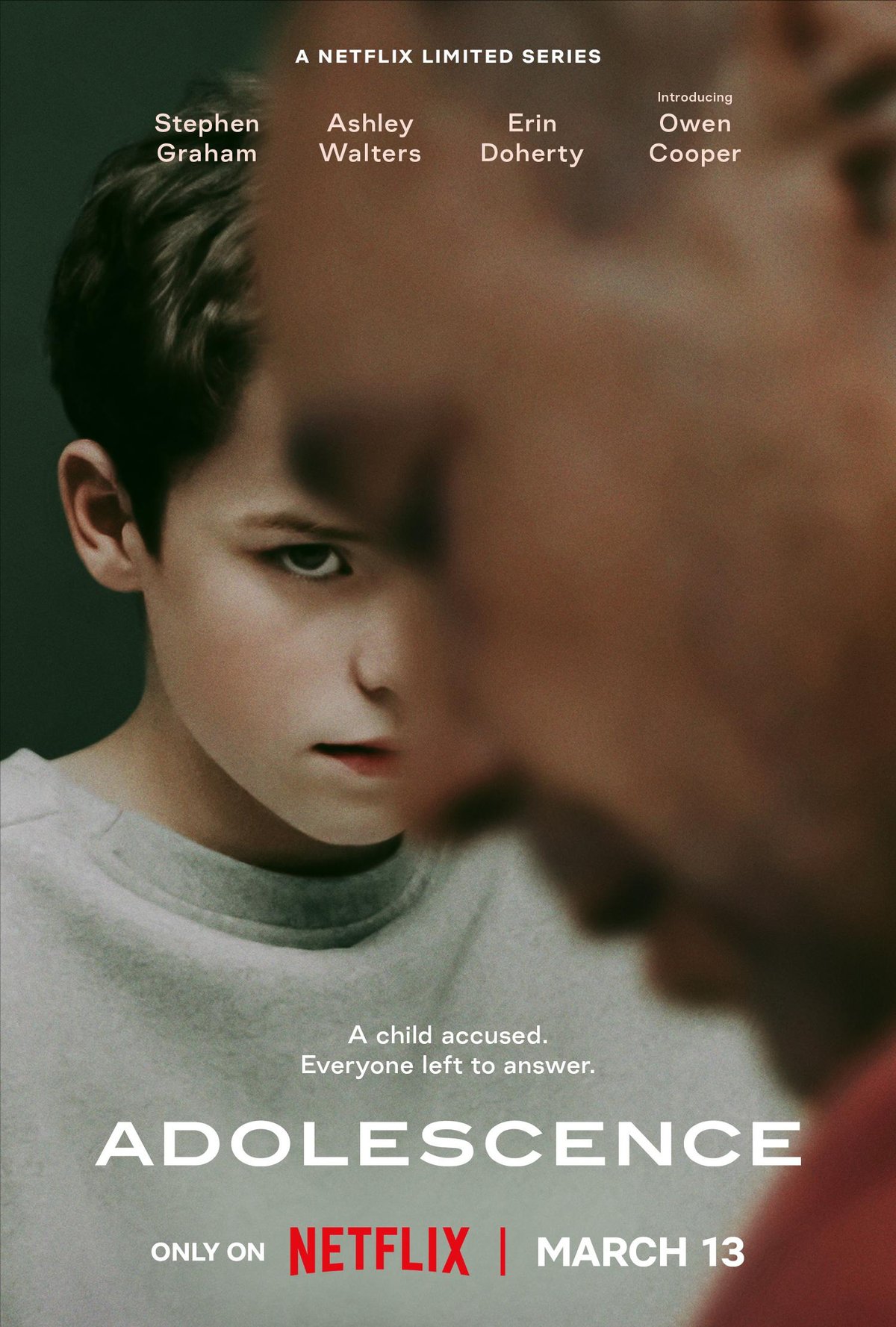
This new Netflix series has been making waves online lately.
It’s only 4 episodes long, but it’s getting rave reviews — especially for 14-year-old Owen Copper, whose performance is absolutely brilliant.
What’s also impressive is that the whole series was shot in one continuous take, with no cuts at all. If you’ve seen the 2019 film 1917, you’ll know what a no-cut, one-take style looks like. It’s a rare filming technique that really puts you right there in the moment, almost like you’re part of the action.

The story follows 13-year-old Jamie, who gets arrested on suspicion of murder.
The first episode covers the arrest — from the raid to the police station interview and meeting with the lawyer. It’s incredibly intense. The director uses the first 15–20 minutes of the arrest to throw you right into Jamie and his dad’s perspective: “He’s only a kid, mate!” “You’ve got the wrong house!” “Why do you need guns for a 13-year-old? He’s 13!” The whole thing hits hard.
And once they get to the station, you get a glimpse into what it really means to “process a suspect.”
By the end of episode one, most viewers — just like Jamie’s dad — probably don’t believe he could be the killer. Just looking at Jamie’s face and how he acts, he doesn’t seem like the type — not your typical troubled teen. Plus, he keeps insisting, “I didn’t do anything. I didn’t do anything wrong.” It makes you wonder — did the police really get the right guy?
That is, until they show the CCTV footage… Could it still be a mistake? Misidentification, maybe?
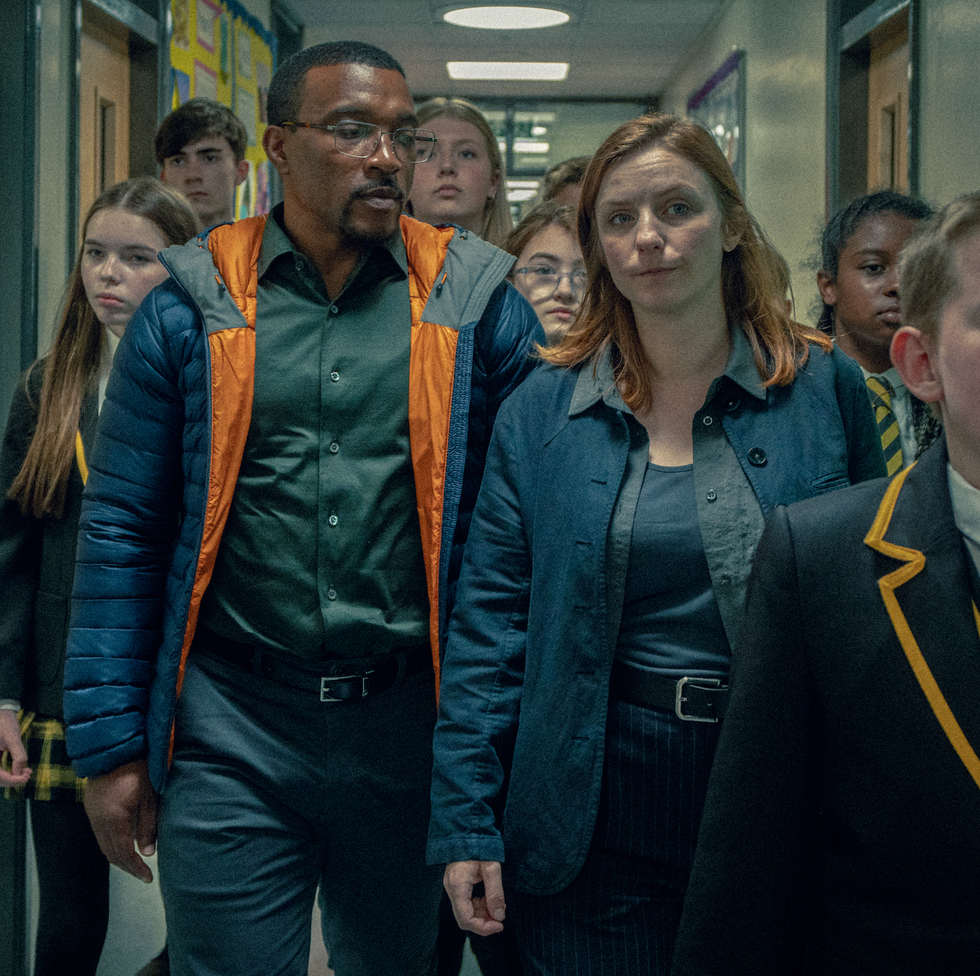
Episode two shifts focus to the officers leading the investigation as they head to Jamie’s school to follow up.
They start interviewing students who might be connected to the case, trying to piece together what really happened. You get a closer look at the school environment, the kids involved, and how the police navigate such a sensitive situation — especially when it involves minors.
It adds another layer to the story, showing how complex things get when a 13-year-old is at the center of a murder investigation.
Credit: Netflix
When the two detectives arrive at the school, they start sensing that something’s off.
Turns out, the school environment is a mess — students are totally out of control, and bullying seems to happen non-stop, right under everyone’s noses. It’s chaotic, and definitely not the kind of place you’d expect kids to feel safe.
Then comes another twist: they take a closer look at Jamie’s Instagram and notice something strange. Those innocent-looking emojis he used in the comments — 🩵💙💜🤎🧡 — actually mean something. Each one carries a hidden message or code.
Suddenly, things don’t seem so straightforward anymore. You start to realise — this case might be way more complicated than it first seemed.
Credit: Netflix
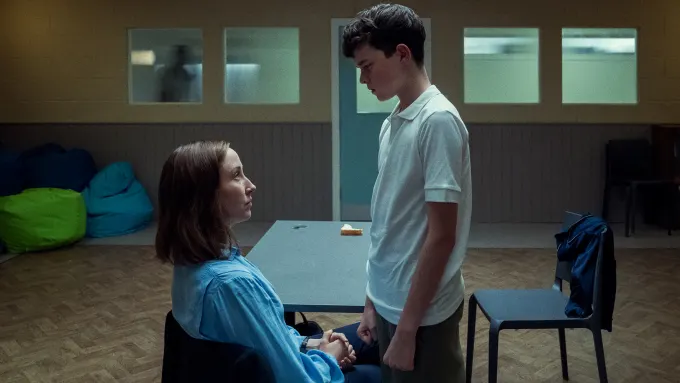
Word is, episode three was actually the first one filmed — and the most unique. There was no script, no written dialogue. Everything was improvised by the two actors on the spot.
And honestly? They nailed it. Both performances were outstanding.
This episode focuses on Jamie being assessed by a psychologist. It’s the first time we really get to see the “real” Jamie — not just the scared kid from episode one, but a more complex version of him. He comes across as
irritable, arrogant, defiant.
It leaves you wondering: is this just a troubled teen under pressure, or is there something darker going on beneath the surface? Either way, this episode really changes how you see him.

Credit: Netflix
The final episode shifts the focus to Jamie’s family — his parents and older sister — and the emotional toll the whole situation has taken on them.
It’s raw and heartbreaking. You really feel how deeply they’re affected, especially the dad. His emotional swings are intense — from denial to anger to complete breakdown. And this episode gives the actor full room to let loose — a real showcase of powerful, unfiltered acting.
It’s not just about what Jamie did (or didn’t do) anymore — it’s about how one incident can tear a family apart. The series ends on a heavy note, leaving you thinking about guilt, truth, and how far parents will go to believe in their child.
As a parent, I also can’t stop asking myself :
But he was in his room, weren’t he?
We thought he was safe, didn’t we? I thought we were doing the right thing.
I was a good mum. I am a good mum.
You’re a good dad.
But we made him.
We’ve all been teenagers once — rebellious, moody, not wanting to talk to our parents about anything.
But back then, there was no social media, no internet. School wasn’t perfect, but bullying wasn’t constant or in-your-face. Communication was face-to-face — not through screens, not through virtual comments and emojis.
My school life was, a bunch of boys messing around, talking nonsense, laughing over silly jokes — that was a typical day. After school, you just went home. Not much social life or distractions, maybe spent time alone, but it didn’t feel lonely or overwhelming.
Now? It’s a different world. Social media is everywhere. It’s way too easy to comment, judge, or throw out emojis without thinking. There’s no eye contact, no tone of voice, no way to see how someone really feels.
So, can we really detach from social media? Honestly… that’s the big question. — but walking away from it isn’t as simple as it sounds.