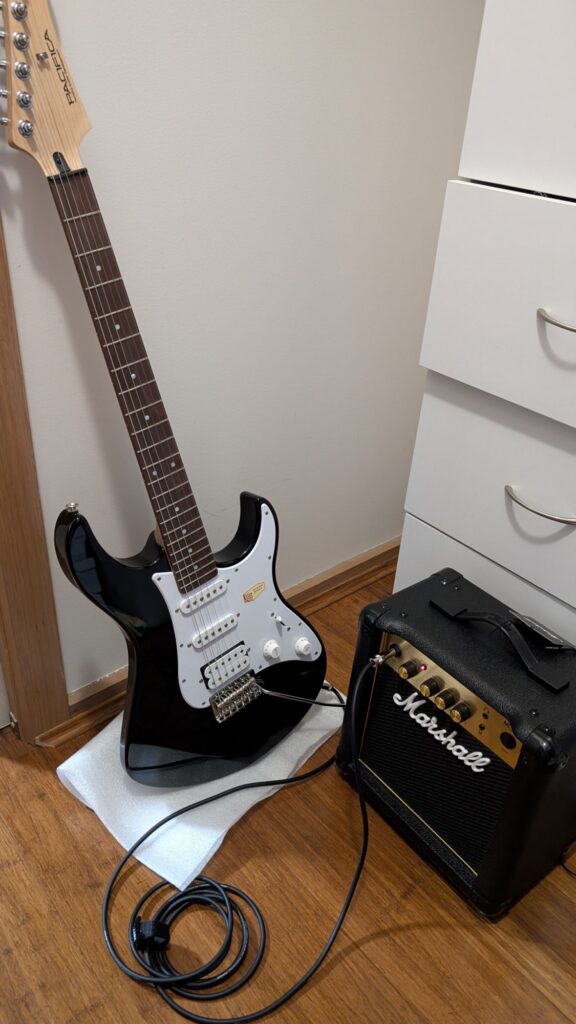
Back in my high school and university days, I once got into playing the guitar. It all started on a whim — I suddenly decided to buy an classic guitar, which cost only about two hundred Hong Kong dollars.
Those were the days before YouTube, social media, TikTok, or Facebook. Information wasn’t so easy to find, and although the basics of guitar aren’t that hard, teaching yourself was definitely not easy. Luckily, I had some background in piano, so strumming a few chords wasn’t too big of a deal.
Later, I found a teacher and took a few weeks of lessons. I still remember changing the strings myself — not very successfully, to be honest. Before long, I lost interest, and the guitar ended up sitting in the corner, collecting dust.
Time flew by — more than twenty years passed — and before emigrating, I finally gave that old acoustic guitar away.

I’ve always loved listening to Beyond’s music — so many of their songs are filled with amazing electric guitar riffs, solos, and melodies that have been etched in my mind for years. I’ve always dreamed of being able to play those songs myself someday.
Now that I have more free time after work, life feels much more colorful than it was twenty-something years ago. Maybe it’s just another sudden impulse, but I’ve decided to finally begin my journey with the electric guitar.
These two solo sections from Beyond’s “Grey Tracks (灰色軌跡)” don’t sound very fast — they actually seem pretty easy at first listen. But later, I realized… they’re anything but easy!😅)。
Compared to the old days, it’s amazing how much electric guitar information is now just a click away — all without even stepping out of the house. Good-quality amplifiers can easily cost anywhere from a few hundred to a few thousand Australian dollars. But I was worried I might lose interest again, just like before, so I didn’t want to spend too much right from the start. I decided to stick with the basics for now — something entry-level — and upgrade later if I really stay into it.
Even though I’m starting small, I still didn’t want to go too cheap. So I decided to look for a branded beginner setup — both the guitar and the amp. Squier (by Fender) and Yamaha both have some great-sounding entry-level electric guitars, priced around A$350 or so.
Choosing an amp turned out to be the real headache. Entry-level ones range from around A$100 to A$300, with different wattages and each brand having its own distinct tone. I started checking out reviews on Reddit, YouTube, and other platforms — and wow, it’s overwhelming!
Since I’ve never actually used an amp before, I honestly have no idea what “good tone” really means — and I get that it’s totally subjective anyway. After going back and forth, comparing and hesitating again and again… and finally,
Guitar: Yamaha Pacifica 112J
Amp: Marshall MG10
Back in the day when I was learning guitar, besides buying tutorial books, you could also get those “Golden Hits” songbooks — packed with chord charts for all the popular songs of the time.

These days, there are plenty of paid apps for learning guitar, and you can also find tons of free sheet music online. If you just want simple chord charts, they’re usually easy to get — most are free. But if you’re after solo tabs, you’ll almost always need to use paid sites or apps.
That said, our “mighty motherland” (China) has no shortage of free guitar tabs floating around — usually in PDF or screenshot format. Getting Guitar Pro (GTP) files, though, can be a bit trickier.
Luckily, Beyond’s songs are really popular in mainland China, so finding their tabs isn’t too hard. I once came across a file online that contained a whole collection of Beyond’s GTP tabs — though the original link is gone now. If anyone’s interested, you can download it from here.
As for English songs and Western bands, guitar tabs are even easier to find. One great site is gprotab.net — a free guitar tab website with a huge library of songs. You can download the tabs, play them directly in your web browser, or even print them out.
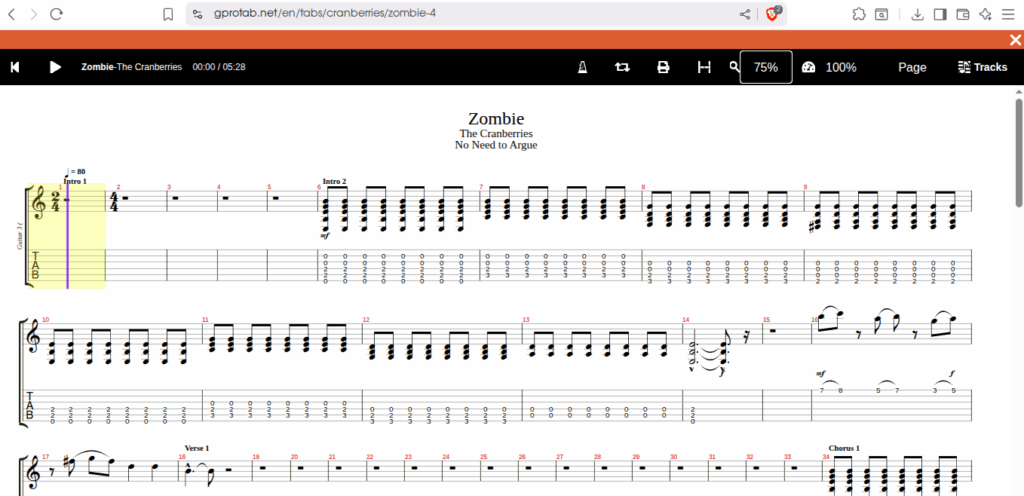
The Cranberries’ “Zombie” is super famous, and I’ve always loved that gritty, distorted electric guitar sound in the background. Turns out, the chords for this song are really simple — the whole song just keeps repeating the same progression:
Em C G D/F#
Even the solo part isn’t too tricky, making it a pretty easy song to get started with on the guitar.
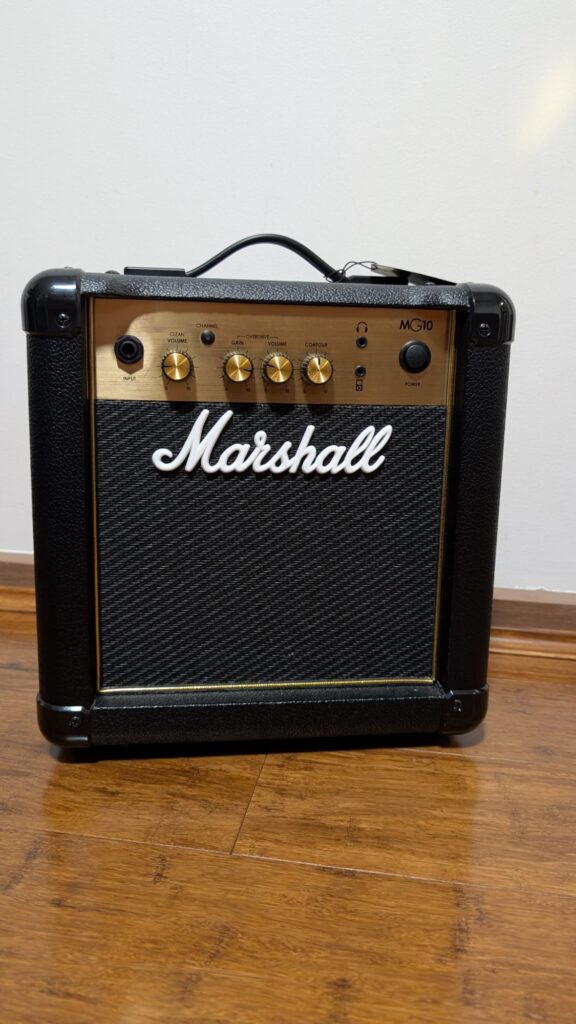
The Marshall MG10 isn’t exactly tiny, but it’s super basic — a 10W max output amp. It has just two channels: Clean and Overdrive, and only three knobs: Gain, Volume, and Contour (for adjusting treble and bass). You can plug in headphones or a 3.5mm line-in. It cost me A$159 — pretty much the cheapest and most basic option.
After playing with it for a little over two months, I started feeling a bit unsatisfied with the MG10’s tone. Of course, I know part of it is just me not playing well enough yet, but the itch to upgrade was hard to resist.
Target was Yamaha THR5.
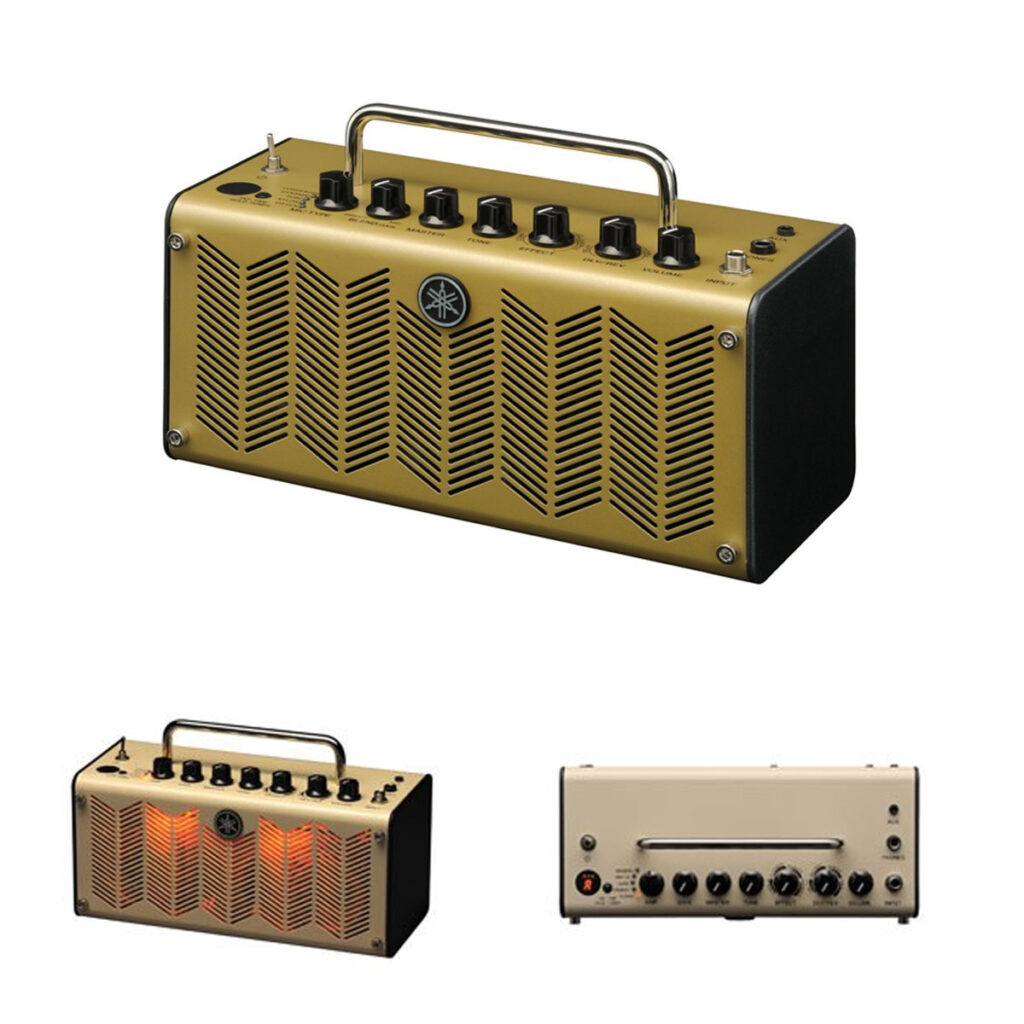
It has a max output of 10W, but it’s smaller than the MG10 and doesn’t really look like a traditional amp. Online reviews praise its tone — it offers Clean, Crunch, Lead, Brit Hi, and Modern amp simulations, plus effects like Chorus, Flanger, Tremolo, and Phaser. That’s way more than the MG10. It can run on batteries or a power adapter, making it truly portable. Price: A$260.
I also looked at amps from other brands, like the Boss Katana Mini and Mini X, and Roland’s CUBE GX. The Katana Mini can run on AA batteries (adapter sold separately), while the Mini X has a built-in rechargeable battery. The CUBE GX, on the other hand, drops battery use entirely — more of a semi-portable amp.
Then, I spotted a Roland Micro Cube for sale on Gumtree — a discontinued model for A$160. Online reviews rave about its tone, and like the Yamaha THR5, it has multiple amp simulations and effects. It can run on both AC and battery power, making it versatile. The seller, likely a guitarist, had taken excellent care of it — it even came with the original box and instruction manual.
Most people know Roland, and Boss is actually a brand under Roland. The CUBE series has become its own branch under Boss, while the Roland logo now only appears on their high-end amps.
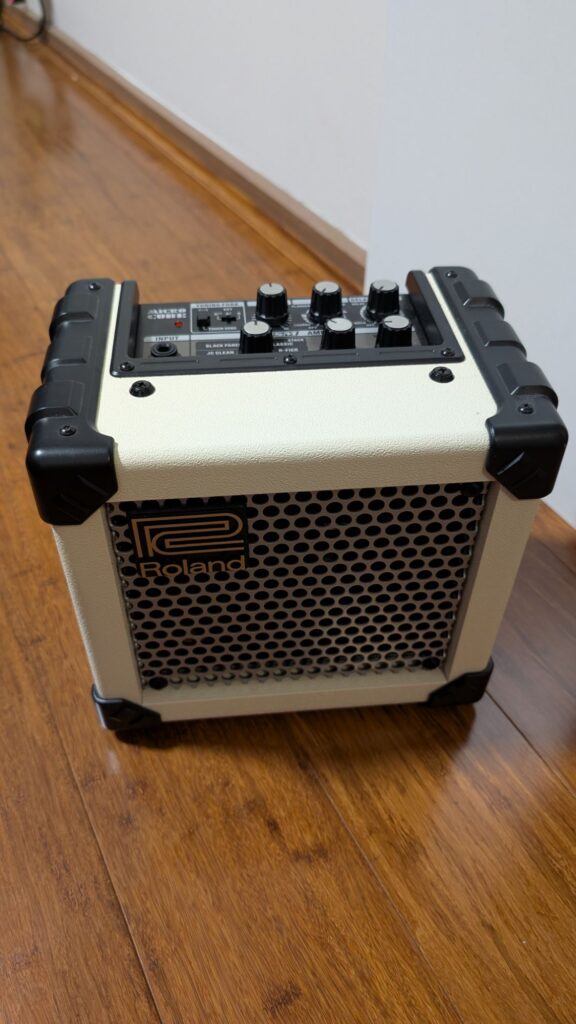

With multiple modes and effects, the Micro Cube sounds way better than the MG10. Plus, it can run on six AA batteries — rechargeable AAs work perfectly too. Super practical.
Here’s my comparison between the Micro Cube and the MG10:
As I mentioned earlier, I had a background in piano. Back when I was 17 and in Form 6, I barely managed to pass Grade 8 Piano from the Royal Schools of Music. Honestly, I never really enjoyed playing classical piano — it felt like a chore — so I gave it up immediately after the exam.
Still, all those years of musical training weren’t wasted. Basic music theory is no problem for me. Timing used to be my weak point, but with a metronome, it’s not too hard. I can tell major and minor scales just by ear. I’d say all this definitely helps when learning guitar.
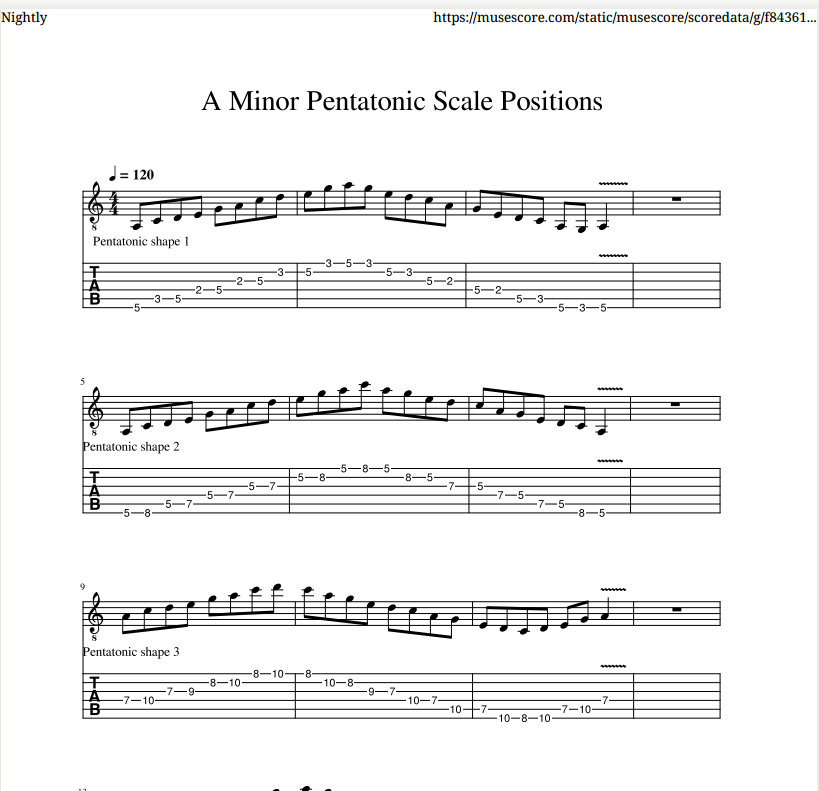
These days, I’m using the same approach I learned from piano back then: start with scales and arpeggios, then move on to songs I’m interested in — whether solos or chords — and practice until I’m satisfied. Then I pick another song and repeat the process over and over.
Three months in, and I can already feel my fingers more aglie and faster.
With a bit more time and patience, I’m confident I’ll eventually be able to play the songs I love.